
The IBS workshop Hypno-CBT® practitioners have been waiting for
Two days of deep clinical training with gastroenterologist Dr Elena Eliadou, who has spent over a decade working with IBS patients in the NHS and New Zealand. A specialist qualification, not an introduction.
DATES
13-14 November
FORMAT
Live Online
INVESTMENT
£495
PLACES
30 places only
THE CLINICAL CASE
Gut-directed hypnotherapy is now first-line. Are you ready to deliver it properly?
70-80%
response rates in well-designed RCTs, sustained at 12-month follow-up
IBS clients are some of the most underserved people in the current system. Short GP appointments, long waits, dietary advice that leads to restriction and food fear, and medication that manages symptoms without addressing what maintains them.
1 in 7
people in the UK live with IBS, most without adequate psychological support
You are already trained in the most effective psychological approach available for this condition. What you may not have is the clinical depth to handle the complexity: the overlapping presentations, the disordered eating risk, the formulation decisions, the clinical decision points that determine whether you help or inadvertently harm.
Certified
rigorous internal assessment, benchmarked against Level 5 standards
This qualification gives you that depth. It was built by a gastroenterologist who has encountered what you will encounter, over thousands of patients and more than a decade of clinical practice.
WHAT YOU WILL COVER
Two full days. One rigorous certificate
A clinical training programme designed around what you actually need to know to work safely and effectively with IBS, including when not to proceed and what to do when presentations are complex.
Day One
- IBS as a disorder of gut-brain interaction
Physiology, epidemiology, the biopsychosocial model in clinical practice, and the updated Rome V 2026 diagnostic criteria, taught as they are announced - The evidence base for psychological therapies
What the meta-analyses actually show for CBT, gut-directed hypnotherapy, and mindfulness, their distinct mechanisms, their targets, and why integration outperforms any single approach - Safe practice: red flags, risk, and scope
Alarm symptom identification, psychological risk screening including suicide risk, referral decision-making, and the clinical boundaries that protect both client and practitioner - Structured IBS-specific assessment
Biopsychosocial framework, validated measures (IBS-SSS, GAD-7, VSI), and how to build an assessment that actually drives your formulation - Case formulation using the 4Ps framework
Applied to the Sarah case vignette. Mapping predisposing, precipitating, perpetuating, and protective factors, and using formulation to make every subsequent clinical decision - Language, expectation, and nocebo as clinical mechanisms
How what you say, and how you say it, directly alters physiological outcomes. Brain-gut neuroscience applied to therapeutic practice
Day Two
- Gut-directed hypnotherapy: mechanisms and evidence
What the research actually shows, how GDH influences visceral hypersensitivity and central pain processing, and why it works even in severe IBS, explained by a gastroenterologist - Manchester and North Carolina protocols compared
Structure, session format, imagery, and suggestions of both established protocols, evaluated critically rather than just described, so you can draw on both with clinical judgement - Personalising Hypno-CBT® from formulation
Five live case exercises: urgency, pain and bloating, constipation, post-meal symptoms, and unpredictable mixed patterns. You will write and adapt script frameworks in real time, working from structure rather than a finished script - Integrating CBT and mindfulness with hypnotherapy
How to build a session that uses all three modalities purposefully: cognitive restructuring, attention training, and hypnotherapy working on the same maintaining cycle simultaneously. This is where Hypno-CBT® goes beyond standard GDH training - Treatment planning, relapse prevention, and between-session work
Structuring a course of sessions, setting realistic expectations, preparing clients for symptom fluctuation, and sustaining gains after treatment ends - Special considerations: complexity, risk, and when to refer
Overlapping DGBIs, disordered eating and ARFID risk, adverse life events and trauma history, extra-intestinal symptoms, and the red/amber/green risk stratification framework for clinical decision-making
YOUR TRAINER
A decade of IBS practice, brought into the training room
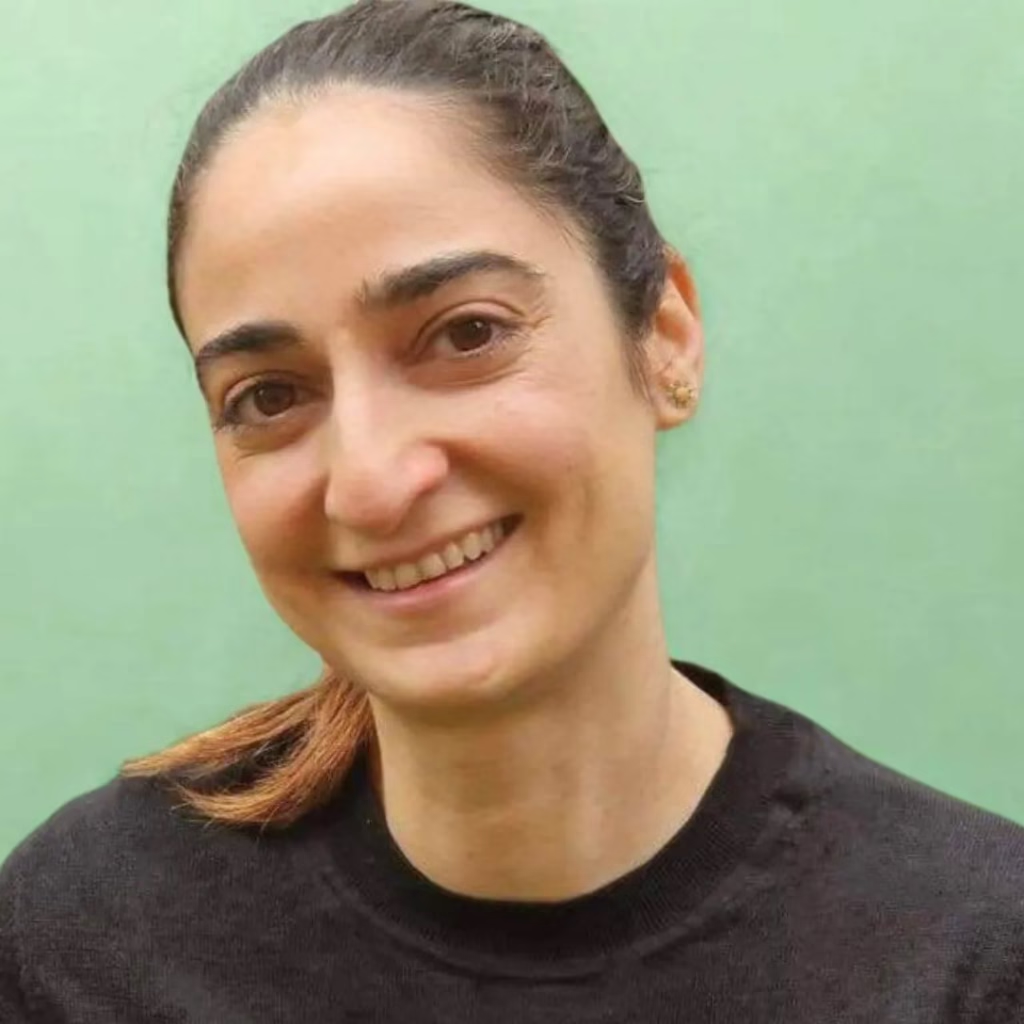
Dr Elena Eliadou
MBBS (Distinction) · MRCP · FRACP
Dip Cognitive Behavioural Hypnotherapy
Founder, Gut Brain Metamorphosis
- Specialist gastroenterologist, UK and New Zealand
- Over a decade of IBS clinical practice
- Thousands of IBS patients across two healthcare systems
- UCL graduate with distinction in medicine, 2002
- FRACP gastroenterology specialist, 2014
Elena came to Hypno-CBT® through her clinical work as a consultant gastroenterologist, not the other way around. FRACP-qualified and trained across the NHS and New Zealand healthcare systems, she spent years watching IBS patients receive inadequate care and then trained in Hypno-CBT® specifically to address that.
That sequence matters. You will not find another IBS hypnotherapy training in the UK delivered by an NHS consultant gastroenterologist with specialist training in Hypno-CBT® who has also worked with the Manchester and North Carolina GDH protocols. She brings diagnostic and physiological depth to this training that non-medical trainers genuinely cannot replicate.
IBS responds well to hypnotherapy when the practitioner understands what is happening physiologically and knows the clinical decision points. You do not need to be a medical professional to take this training. That is the point: Elena provides the medical grounding so you arrive at those clinical moments with confidence rather than guesswork.
The case formulation framework, the assessment tools, the special considerations section, the risk stratification criteria, these all reflect what she actually encountered with thousands of real patients. She is also teaching the updated Rome V 2026 diagnostic criteria as they are published, making this one of the most current IBS clinical trainings available.
Her clinical position is clear: IBS symptoms are real, physiologically grounded, and modifiable. Everything in this training is built from that starting point.
WHAT IS INCLUDED
Everything you need to practise with confidence
Comprehensive manual
Script frameworks, intake forms, assessment templates, case formulation tools, and a metaphor and imagery directory for IBS presentations.
Internally Awarded Certificate
Internally awarded certificate with rigorous assessment, benchmarked against Level 5 standards. Assessment opens later in 2026 — you have time to consolidate your learning before submitting.
Assessment support
20-question MCQ and written case study based on the Sarah case vignette used throughout both teaching days. Assessment opens later in 2026. Marking guidance provided.
Small cohort
Maximum 30 places. This is the pilot delivery. You will be part of shaping how this qualification develops.
Clinical frameworks
The biopsychosocial assessment model, 4Ps formulation framework, treatment planning structure, and red/amber/green risk stratification, all built for IBS practice.
THE QUALIFICATION PATHWAY
From workshop to certificate
The Certificate in Hypno-CBT® for IBS is internally awarded and rigorously assessed, benchmarked against Level 5 standards. The assessment opens later in 2026, so you have a few months after the workshop to consolidate before submitting. It is designed to test clinical reasoning, not recall.
If you are working with IBS clients now, you are likely already doing much of what this certificate formalises. The framework makes your practice rigorous, transferable, and verifiable — and the gap between the workshop and assessment gives you time to apply it in practice before you are evaluated on it.
- Attend the two-day workshop
- Complete the MCQ assessment: 20 questions, pass/fail, up to three attempts. Tests clinical knowledge and reasoning, not memorisation. Assessment opens later in 2026
- Submit the written case study: Structured analytical questions based on the Sarah case vignette used throughout both teaching days. Submitted once the assessment portal opens later in 2026.
- Complete supervised practice: Supervision requirements completed after the workshop. Full details will be confirmed ahead of the assessment opening.
- Receive your Level 5 certificate: An internally awarded certificate issued by the UK College of Hypno-CBT® on successful completion of all assessment components.
RESERVE YOUR PLACE
Ready to book?
13-14 November 2026
Best Value
This is the pilot cohort — strictly limited to 30 places.
£495
- Comprehensive clinical manual
- Internally awarded certificate
- Assessment support included
- Small cohort — max 30 places